Do Heat Pumps Work in Freezing Temperatures?
Do Heat Pumps Work in Freezing Temperatures?

Oct 14, 2025
Do Heat Pumps Work in Freezing Temperatures?
You may be wondering if heat pumps, like the Voltas Heat Pump, can work in freezing temperatures, especially in areas that experience sub-zero temperatures for long periods. The short answer is yes, Voltas Heat Pumps are specifically designed to perform efficiently in cold climates, ensuring warmth even when temperatures drop significantly.
We are going to cover heat pumps today on a cold climate blog, myths, misconceptions and what makes certain heat pumps specifically designed to handle the extreme cold.
Understanding How Heat Pumps Work in Cold Climates
Heat pumps, including the Voltas Cold-Climate Heat Pump, have become one of the most efficient systems for both heating and cooling in homes, especially when trying to reduce energy consumption. But how do they perform in lower temperatures? Modern systems like the Voltas Heat Pump are designed to work effectively even in freezing conditions, ensuring year-round comfort.
A heat pump does not produce heat in the usual way. Rather, it transfers heat somewhere it is not present and takes it where it does not belong, and that is to the inside, where you are and strips out the outside air (even at low temperatures) of its heat. As temperatures get lower, the efficacy of a heat pump also declines, but contemporary systems are tested to perform under much lower temperatures than someone might believe.
How Does a Heat Pump Extract Heat from Cold Air?
In essence, a heat pump works on the principles of heating and transferring the heat through the refrigerant. It is just the opposite of your fridge. When in heating mode, the heat pump removes the exterior air (even when outside is cool) and pumps it into the home to warm up your house.
Voltas Heat Pumps, unlike conventional heating systems (e.g., electric or gas furnaces), do not produce heat but rather move heat between the air and your home. Even when it is cold outside, Voltas Heat Pumps efficiently extract heat from the air, making them a reliable heating solution in extreme weather conditions.
While it may seem counterintuitive, heat pumps can efficiently extract heat from air temperatures as low as -15°C (5°F) or lower, depending on the system.
Temperature Thresholds
As a rule, heat pumps are efficient at specific temperature ranges, though there are limits to their efficiency. So, what are the temperature limits of modern heat pumps?
What Temperature Range Do Modern Heat Pumps Operate?
Warm-climate heat pumps have been developed to operate at the low end of the climatic scale, in freezing weather. Whereas conventional heat pumps tend to work in temperatures above about -5°C (23°F), cold-climate heat pumps are designed to work in far colder conditions.
A few high-performance systems are developed to operate to temperatures as low as -30°C (-22°F), and would thus be suited to Canadian winters and other cold locations.
What Is the Lowest Temperature a Heat Pump Can Work In?
Voltas Heat Pumps, especially their cold-climate-rated models, are designed to work efficiently down to temperatures as low as -25°C (-13°F), ensuring reliable heating even in Canada’s harsh winters. These systems incorporate advanced technology like smart defrost cycles and low-temperature refrigerants, making them perfect for extreme cold.
It should be understandable that the effectiveness of the heat pump decreases when the temperature drops. This is where backup heating is necessary.
Differences Between Standard and Cold-Climate Heat Pumps
All heat pumps are not the same. Ordinary heat pumps can fail in conditions that are below freezing temperatures. Nonetheless, cold-climate heat pumps are specially enhanced to experience harsh winter conditions and be able to perform well even under freezing conditions.
What Makes a Heat Pump “Cold Climate Rated”?
To provide ultra-low-temperature performance, cold-climate heat pumps are designed with a number of additional advanced features. This is what distinguishes them:
Special Refrigerants: Voltas Cold-Climate Heat Pumps are equipped with special refrigerants like R-454B, which work efficiently in low temperatures, ensuring your home stays warm even when the outside temperature plummets. These advanced refrigerants, combined with two-stage compressors and smart defrost cycles, make Voltas Heat Pumps the go-to choice for reliable, efficient heating in freezing conditions.
Two-Stage or Inverter Compressors: The two-stage compressors or inverter compressors enable this heat pump to work more effectively by controlling heating output depending on the changing outdoor temperature. This helps especially during constant cold weather indoors.
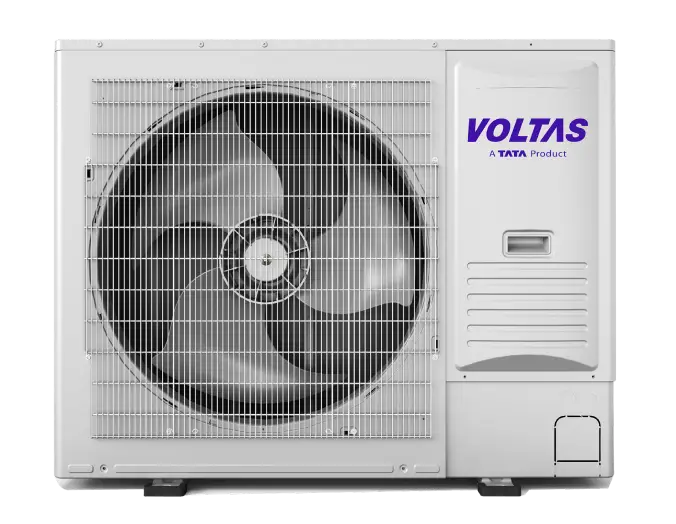
Smart Defrost Cycles: The cold-climate heat pumps come with smarter defrosting cycles, which avoid having ice accumulate on the outside fan, making the system avoid downtime even in freezing temperatures.
Do You Need Backup Heating in Extreme Cold?
Voltas Heat Pumps are designed to handle extremely cold conditions, but in areas where temperatures drop very low, backup heating is often necessary. Models like the Voltas Multi-Zone System come equipped with heating strips to ensure your home stays warm even when temperatures reach their lowest.
Heating Strips (Backup Heat)
Ductless heat pumps are usually composed of many cold-climate circuits with a heating strip, a feature that turns on under a pre-set low outdoor temperature. These electric heating strips are an addition to primary heating, which means that your house or apartment will always be warm regardless of the weather in the chilliest months.
Backup heating may be efficient, and one should note that it can increase the use of energy. This is why one should always use the heat pump to the maximum, in particular, the models with a cold-climate origin.
Comments on Myths About Heat Pumps in Cold Climates
Heat pumps have a number of myths that are associated with them when it comes to cold climates, particularly the performance in snow and freezing temperatures. It is time that we explode some of the most popular myths.
“Heat Pumps Don’t Work in Snow” – Myth Busting
Another myth is that heat pumps do not work with snow. As a matter of fact, heat pumps have been created with the capability to work under cold weather and even on snowy grounds. An example is the Voltas whole-house heat pump, which would operate well despite snow falling as long as the load is not blocked with heavy snowfall on the outdoor unit.
Myth: Heat pumps can’t provide sufficient heat in snowy conditions.
Reality: Cold-climate heat pumps are designed to work in snow and freezing conditions as long as they are properly maintained, such as clear high out of snow and ice.
Clarifying Misunderstandings Among Homeowners
Most homeowners have gotten the wrong information about heat pumps and their capacity to withstand extreme cold. Due to technological upgrades, especially inverter compressors and smart refrigerants, the new era heat pumps now have the capability of production as low as between -40C and -50C to Canadian winters and other extreme weather conditions.
In cold climates, heat pumps can be a dependable and efficient form of heating down to very cold conditions, and when properly installed and maintained, may prove to be a very good long-term solution to heating, as well as cooling.
Takeaway
The heat pumps are an astounding remedy to all-year, cash-savvy, and comfortable weather, even in low temperatures. The availability of the right cold-climate heat pump, such as the Voltas heat pump, means that you are capable of experiencing constant internal comfort regardless of the severity of the winter season outside. Knowledge about how heat pumps work in cold weather, the necessity of a backup heater, and technology developments of cold-climate heat pumps will assist you in making a wise choice of a heat pump for your home.
Don’t let the cold fool you; modern heat pumps are built to perform in freezing temperatures. With the right system, you can enjoy reliable, energy-efficient heating and cooling throughout the year, even in the coldest conditions.